Programmatic is a feature on the Lynx SSP Platform that allows you, as a Media Owner, to register and manage all your DOOH (Digital-Out-of-Home) Inventory so that it can be sold and made available automatically, thereby maximizing revenue potential without the need for manual processes with advertisers. Simply put, this feature facilitates real-time, automated digital campaign transactions, connecting you or the Media Owner from Lynx SSP as the Supply-Side Platform with various Advertisers from DSP (Demand-Side Platform) to sell your available inventory. This page helps you understand the process involved in the Programmatic ads.

Direct (Regular) vs Programmatic Campaign

Currently, in the digital campaign ecosystem, there are two main methods for buying and selling ad inventory: Direct Campaign (direct purchase), better known in the Lynx SSP Platform as Campaign Regular (see Campaign Management (Regular)↗) and Programmatic Campaign. Understanding the differences between the two is essential for optimizing strategies and achieving campaign goals. Direct Regularvs Programmatic Campaign Pn
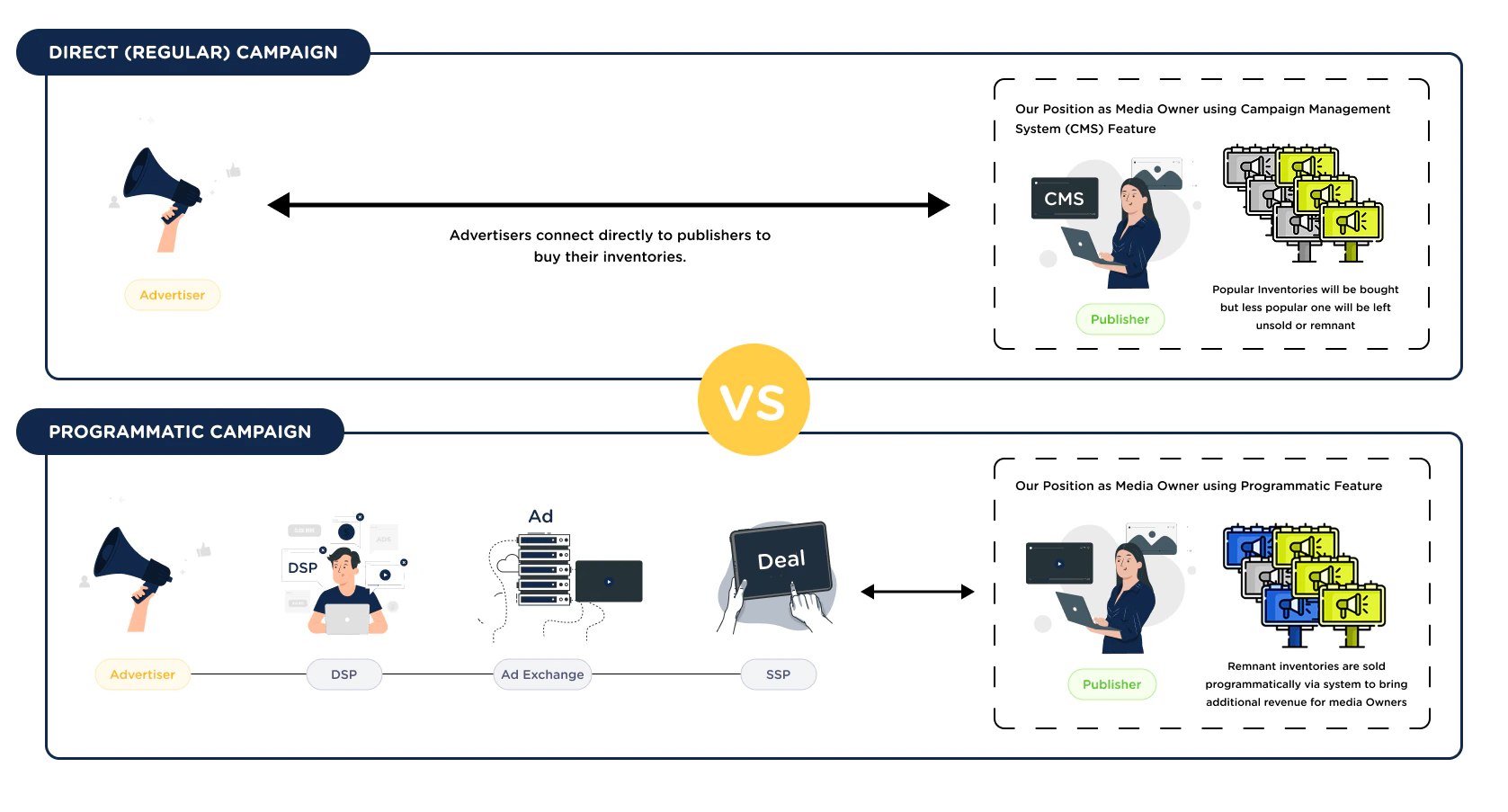
‎ ‎ ‎ ‎ ‎ ‎

Programmatic Process

The programmatic process on the Lynx SSP platform consists of the following series of processes: Programmatic Process Pn Case Example: Inventory A has 4 slots, 3 slots are filled with Regular Campaigns, and there is still 1 slot available (filled with filler). To maximize revenue and fill the 1 available slot in Inventory A, the Media Owner activates the Inventory to programmatic (See Set DOOH Inventory to Programmatic ↗ ) and create a Deal (See Deal Management ↗). Based on the programmatic process flow described above, the scenario is as follows:
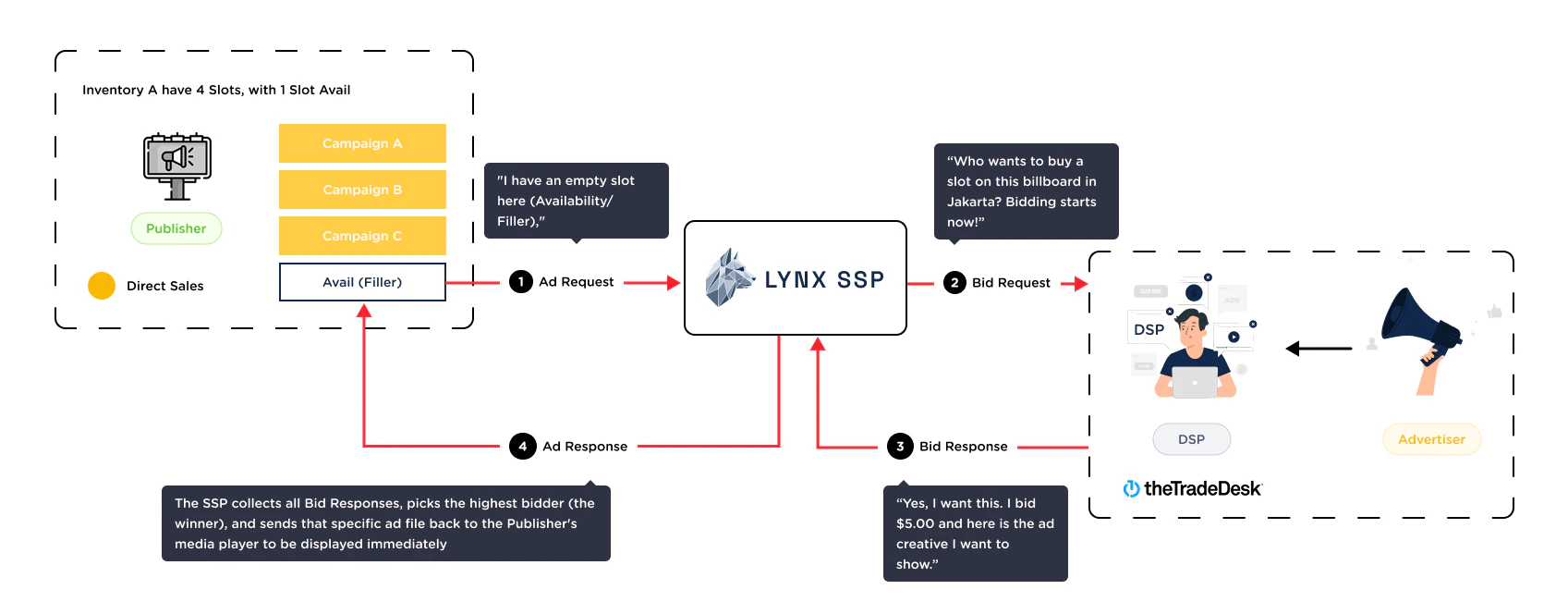
  1. DSP provides Ad Response and Bid Price > Floor Price = Displays Creative Content.
  2. DSP provides Ad Response and Bid Price < Floor Price = Displays Filler.
  3. DSP does not provide Ad Response at all / timeout = Displays Filler.